



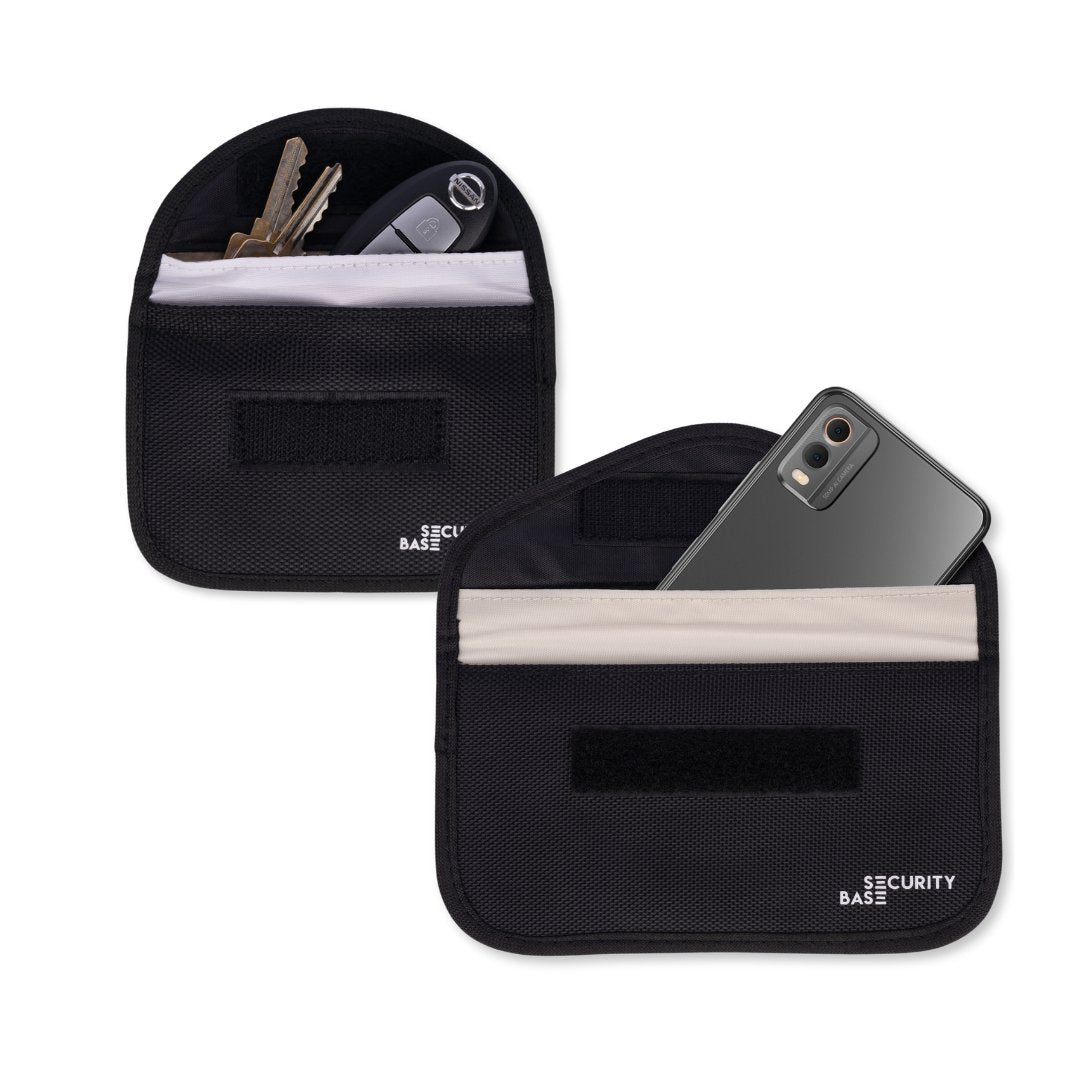



If you have a car with keyless entry or push-button start, you may have heard that keeping your car key in a Faraday pouch or Faraday box can help protect against keyless car theft.
Both work on the same principle. They block the wireless signal from your key fob so it cannot be picked up and extended during a relay attack.
So which is better, a Faraday pouch or a Faraday box?
For most people, a car key Faraday pouch is a better option. A good-quality pouch provides the same signal-blocking protection as a Faraday box, but it is smaller, generally less expensive, and, most importantly, portable.
A box works well at home, especially if you want to store several keys together. But your car key does not stay at home. A pouch can protect your key at home, at work, at a hotel, while travelling or anywhere else you park your car.
What is a car key Faraday pouch?
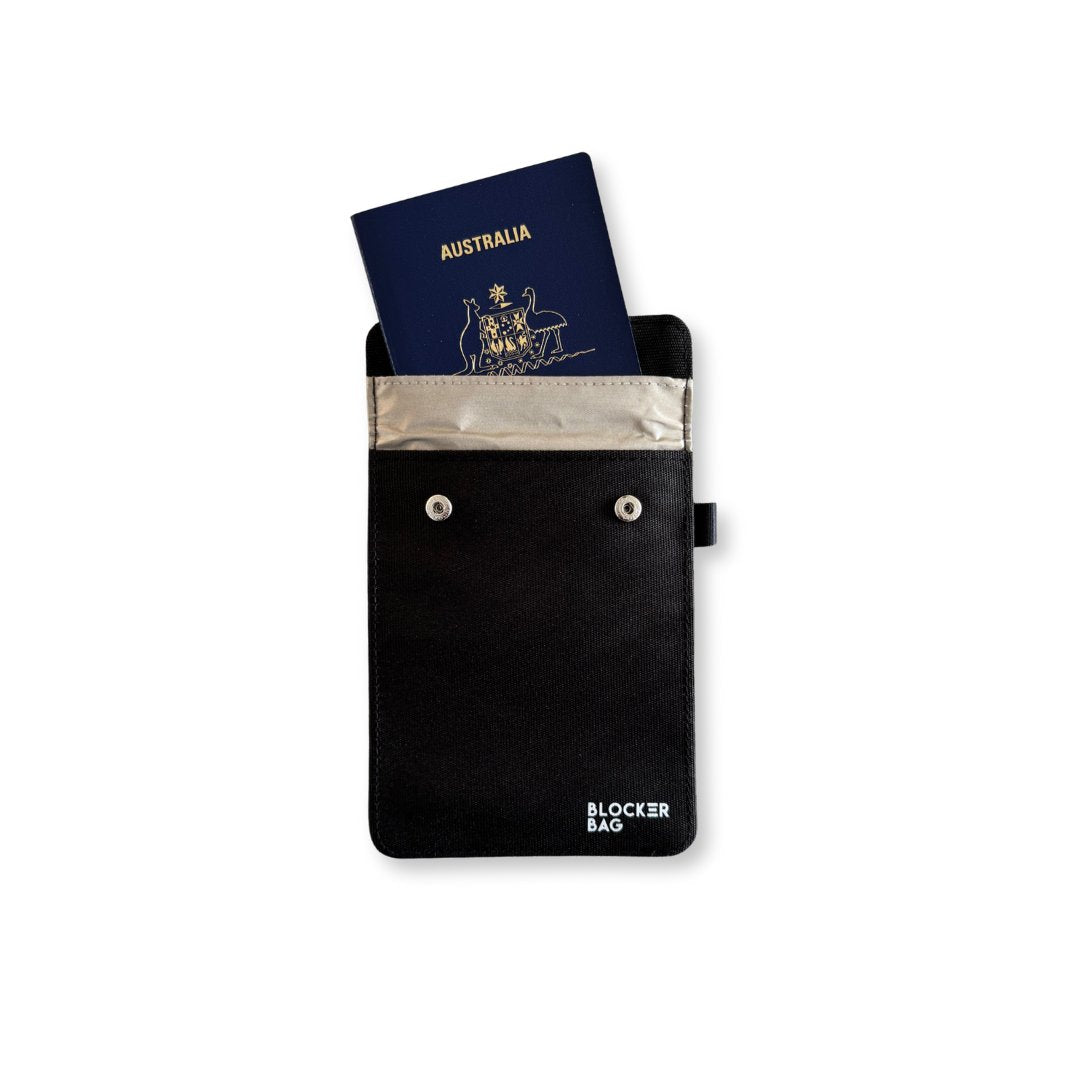
A car key Faraday pouch is a small pouch lined with conductive signal-blocking material.
You may also see these products described as:
- Faraday bags for car keys
- signal-blocking pouches for car keys
- key fob signal blockers
- RFID-blocking key pouches
- relay theft pouches
When your car key is completely enclosed inside an effective Faraday pouch, the conductive material blocks wireless signals from passing through the pouch.
This means your keyless vehicle should no longer be able to detect the key while it is inside.
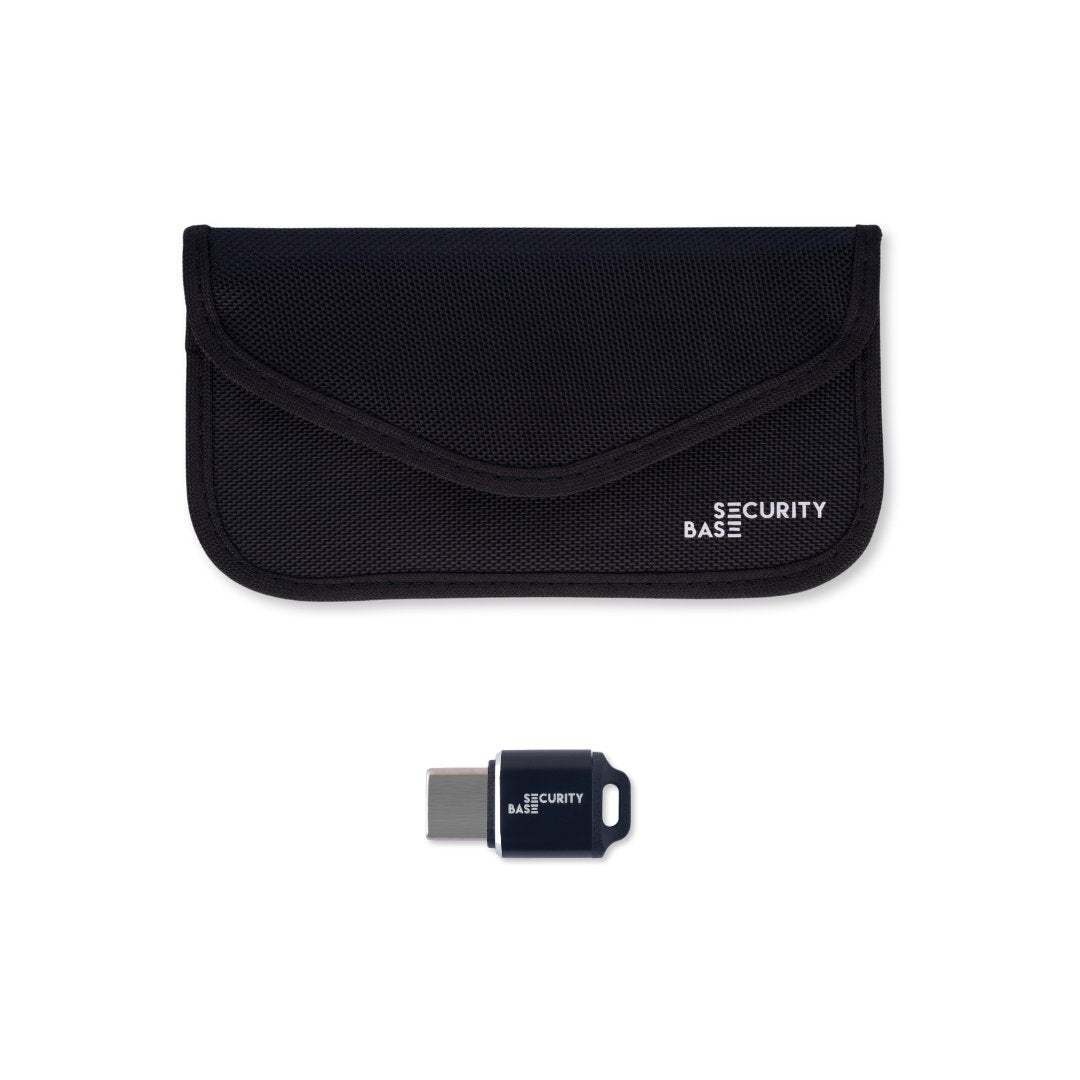
The SecurityBase Car Key Faraday Pouch uses two conductive copper-nickel shielding layers within its four-layer construction and is designed specifically for car keys and key fobs.
Why would you need to block your car key signal?
Modern keyless vehicles communicate wirelessly with their key fobs.
With passive keyless entry, you may only need to approach the car with the key in your pocket or handbag before the vehicle allows you to unlock the door. Many vehicles also use push-button start, so you don't need to insert the key into the ignition.
This is convenient, but thieves can exploit the wireless communication through a type of theft known as a relay attack. During a relay attack, thieves use electronic equipment to relay communication between your vehicle and its legitimate key.
One device is positioned near the vehicle while another attempts to communicate with the key fob, which may be inside your house.
The devices relay the communication, potentially making the car believe its genuine key is nearby. Depending on the vehicle, this may allow thieves to unlock or start the car without physically possessing the key.
RACV explains this type of theft in more detail in its guide What are Faraday bags and how do they prevent car theft?.
How does a Faraday pouch help prevent relay theft?
Relay theft depends on communicating with your genuine key fob. A Faraday pouch interrupts that communication.
When the key is properly enclosed in an effective signal-blocking pouch, the vehicle cannot communicate with it. That also means relay equipment can't access the key’s wireless signal and extend it to the vehicle.
Place your key inside the signal-blocking compartment and close the pouch.
Do Australian authorities recommend Faraday pouches?
Yes. Signal blocking is now included in vehicle-security advice from Australian motoring organisations and police.
RAA advice for South Australian drivers
RAA specifically recommends signal-blocking pouches for keyless vehicles as one of the measures motorists can take to help prevent thieves from gaining electronic access to a car.
RAA also recommends keeping keys out of sight, locking the vehicle, parking in well-lit or secure locations where possible and considering visible security measures such as steering wheel locks or immobilisers.
You can read the full advice in RAA’s article Aussie icon still the most targeted car in SA.
Victoria Police advice
Victoria Police also specifically lists an RFID blocker or Faraday box/bag for your key fob among the anti-theft devices motorists can consider.
Its advice also covers measures such as:
- steering wheel locks
- engine immobilisers
- car alarms
- OBD port protection
- GPS or Bluetooth trackers
- secure key storage
This reinforces an important point: a Faraday pouch is best used as one layer of vehicle security, rather than relying on any single product.
See Victoria Police: Preventing motor vehicle theft.
South Australia Police advice
South Australia Police recommends keeping vehicle keys and remotes secure and out of sight rather than leaving them in obvious locations.
SAPOL also recommends additional vehicle-security measures such as steering wheel locks, aftermarket immobilisers and vehicle trackers.
See SAPOL: Keep your car safe at home.
SAPOL also provides more general advice on reducing the risk of vehicle theft in its Prevent car theft guide.
Faraday pouch or Faraday box: what’s the difference?
Both products create a shield around your key fob and block its wireless communication.
The main difference is how you use them.
Faraday box for car keys
A Faraday box is a rigid container containing conductive shielding material. It can be a good option if you:
- keep several car keys in the same place
- want one permanent key-storage location at home
- prefer a rigid container
- do not need to take the protection with you
A Faraday box can therefore be convenient for a household with several keyless vehicles. The disadvantage is that it protects your key only while it is inside the box.
Once you leave home, the box stays behind.
Car key Faraday pouch
A Faraday pouch provides the same basic type of shielding in a much smaller format.
You can use it:
- at home
- at work
- while travelling
- at a hotel
- at the airport
- at a restaurant
- when visiting friends or family
- anywhere else you park your vehicle
You take the pouch with the key. That portability is the main reason I prefer a Faraday pouch for car keys over a box for most people.
Which is better, a Faraday pouch or box?
Both can work effectively if they are properly designed, in good condition and completely closed. For everyday use, however, the Faraday pouch is the better option for most drivers.
It offers several practical advantages:
- portable
- compact
- easy to keep with your key
- suitable at home and away
- generally cheaper than a box
- available in different sizes for different key fobs
- easy to test against your own vehicle
A Faraday box may still make sense if you have multiple car keys and want one fixed storage location at home.
The important point is not whether the protection is shaped like a pouch or a box. What matters is whether it creates an effective, fully enclosed signal-blocking barrier around the key.
Does a Faraday pouch really work?
A properly constructed Faraday pouch should prevent a keyless vehicle from detecting the key while it is sealed inside.
RACV also recommends testing the protection yourself. Its guide to car security technology includes Faraday pouches alongside other vehicle-security measures.
Testing your pouch is simple:
- Place your key completely inside the signal-blocking compartment.
- Close the pouch securely.
- Take the pouch with you to your vehicle.
- Try to unlock the vehicle using its normal keyless-entry function.
If the key is placed in the pouch correctly, the vehicle should not detect the key. If your car uses push-button start, you can also take the closed pouch inside the vehicle and see whether the car recognises the key. Then remove the key from the pouch and test it again. The vehicle should start as it always good.
This makes car key Faraday pouches particularly easy to verify because you can test their signal blocking directly against your own vehicle.
What should you look for in a car key Faraday pouch?
Not all products that look like Faraday pouches necessarily provide the same level of signal blocking.
The outer fabric doesn't provide the protection. The important part is the conductive shielding material inside.
- Effective shielding material; SecurityBase uses copper-nickel conductive shielding material specified with a surface resistance below 0.05Ω and shielding effectiveness exceeding 85 dB.
- More than one shielding layer; SecurityBase car key pouches contain two conductive Faraday layers within their four-layer construction. The second conductive layer provides additional shielding and redundancy, rather than relying on a single conductive layer.
- A secure closure; A Faraday enclosure works best when the conductive material surrounds the item inside. The opening therefore matters. The SecurityBase pouch uses an extended fold-over design and Velcro closure to help create a complete signal-blocking enclosure when properly closed.
-
The correct size; Your key should fit comfortably inside the shielded compartment. If the pouch is too small and the contents prevent it from completely closing, the shielding can be compromised.
The SecurityBase Car Key Faraday Pouch is available in two sizes:
Standard: 13 × 9 cm, suitable for most modern car key fobs.
Large: 13 × 12 cm, provides additional space for larger key fobs or combinations such as a car key and garage remote.
Where should you keep your car keys at home?
Even with a Faraday pouch, you should still store your keys securely.
South Australia Police recommends keeping vehicle keys and remotes out of sight and away from obvious locations.
This advice is particularly relevant because stealing the genuine key is another way vehicles can be taken.
See SAPOL’s advice on keeping your car safe at home.
A good routine is therefore:
- Place the key inside the Faraday pouch after using the vehicle.
- Make sure the pouch is properly closed.
- Store the pouch somewhere secure and out of sight.
A Faraday pouch helps protect against wireless access to the key, while sensible key storage also helps protect against physical theft.
Should you keep your key away from the front door?
Yes. Keeping the key away from doors and windows is sensible, but distance alone should not be confused with signal blocking.
A Faraday pouch physically shields the key's wireless communication rather than relying solely on distance.
RACV discusses this risk in its article What are Faraday bags and how do they prevent car theft?.
RAA’s advice also combines both approaches: keep keys out of sight and consider a signal-blocking pouch for keyless vehicles. See RAA’s vehicle theft advice.
Do Faraday pouches protect against every type of car theft?
No. A Faraday pouch is specifically intended to help protect against attacks that rely on wireless communication with your genuine key fob, particularly relay attacks.
Vehicles can also be targeted through other methods, including:
- theft of the physical key
- forced entry
- manipulation of vehicle electronics
- diagnostic or OBD attacks
- programming another key
- physically moving or towing the vehicle
For more information, you can also read our guide on how effective car key Faraday pouches are.


